When the lemons come in
Menton’s trees fruit through the year, and the winter crop is the one worth waiting for.
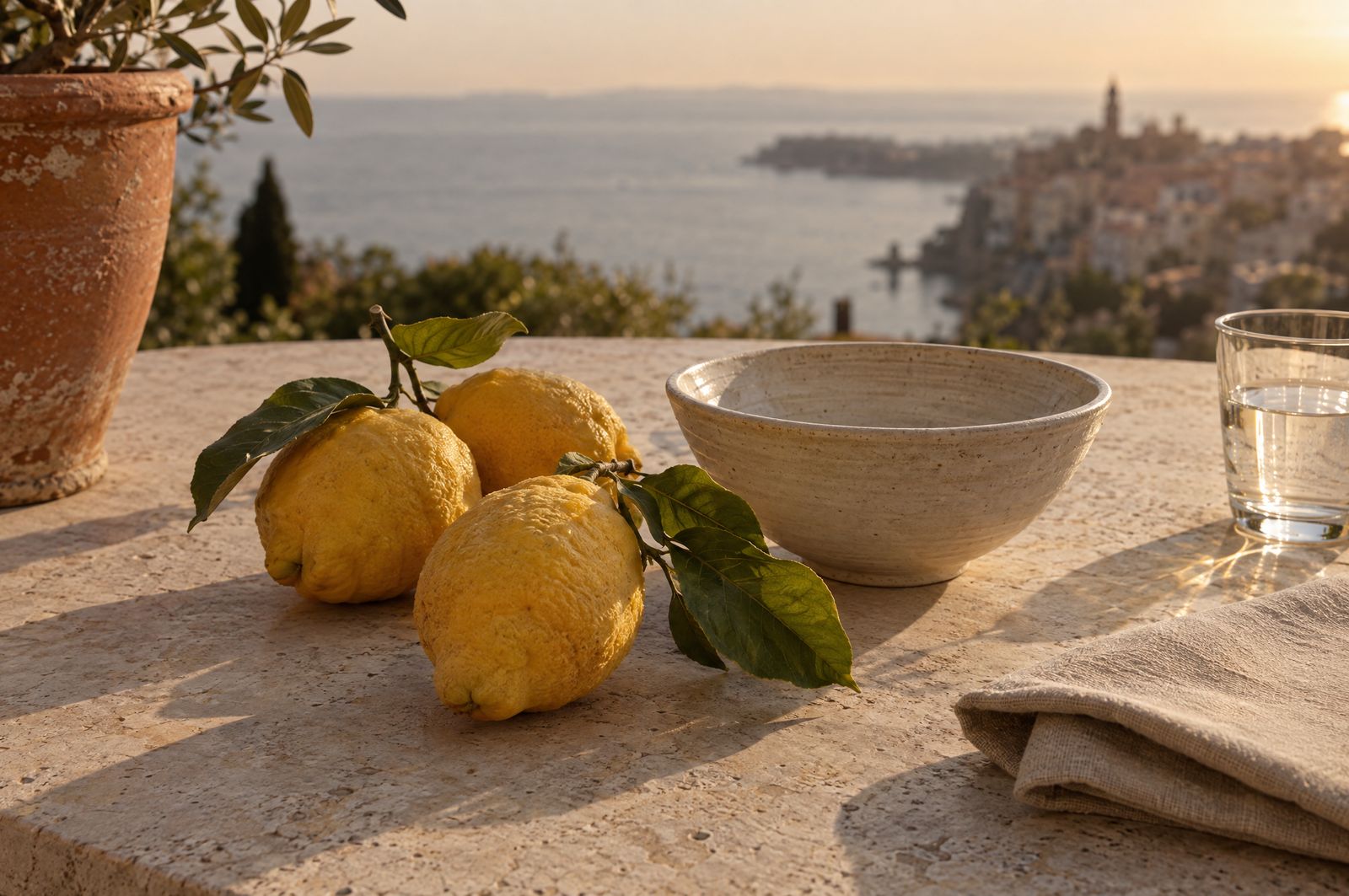
Every house we keep has at least one lemon tree, and most have three or four that nobody planted on purpose. They are the town’s signature and its most reliable tenant: in flower in one month, in fruit in the next, and never entirely without either. A guest in August will find lemons on the tree. They are not the good ones.
The Menton lemon is a winter fruit. The crop that matters sets in autumn and comes in from December, thick-skinned, heavy, sweeter than a lemon has any right to be, and the town builds a festival around it in February for good reason. The summer fruit is thinner, sharper and fewer, and the tree is mostly resting.
Which is why, when a tree is heavy in winter and a house is empty, the gardener picks. A crate goes to the kitchen door, a note goes in the Report, and the owner who arrives at Easter finds a jar of confit in the fridge that tastes of their own garden in a month they were somewhere else. It is a small thing. It is also the whole point of keeping a house rather than watching it.
The trees themselves want very little: water in the dry months, a light hand with the secateurs in spring, and protection from the one thing they cannot take, which is a hard frost. It has not happened in years. We keep the fleece in the shed anyway.